Author name: admin

ROLE OF LOGISTICS IN FULFILLING GOVERNMENT TENDER LIPL

The Indispensable Role of Logistics in Fulfilling Government Tender

Introduction  As the government aims to provide the best services to its citizens and promote public welfare, logistics in the government sector plays a vital role. It involves numerous activities including joint planning, management of information systems, tendering, negotiation, sourcing, procurement, scheduling tasks, contracting, order processing, inventory management, warehousing, and disposal. In the government sector, logistics ensures that goods are delivered to the right place, at the right time, and at the right price. Without logistics, the process would not be possible. Therefore, understanding the requirements of the Government Organization by the Logistics Service Provider is crucial for achieving successful outcomes.   What We do at Logistic Integrators for our PSU Customers We meticulously analyze the logistic requirements of each PSU, giving special attention to compliance and the rigorous tendering process for technical and commercial evaluation as dictated by the Tender norms. At Logistic Integrators, our dedicated and knowledgeable team of experts caters to the specific needs of PSU’s, offering customized solutions for the transportation of both small and large freight across the globe through our extensive network and channel partners. Having earned the trust of several government projects in the past, Logistic Integrators’ ability to secure the best deals has greatly contributed to efficient execution. Our services yield numerous advantages, such as improved supply chain efficiency and an enhanced customer experience. Through our focus on enhancing supply chain efficiency, we can help reduce delivery times, optimize inventory management, and minimize lead times. Additionally, we are proud to have the opportunity to serve Maharatna, Navratna, and Miniratna PSU’s. Overall, Logistic Integrators play a pivotal role in overcoming the challenges encountered in PSU logistics operations. By offering reliable bidding for long-term tenders and optimizing the supply chain, we actively contribute to improved operational efficiencies and an elevated customer experience.

The Indispensable Role of Logistics in Fulfilling Government Tender Read More »

Gap for Mid Size Exporters and Importers

Unlocking Opportunities: Bridging the Gap for Exporters and Importers

Introduction   Ocean-bound Logistics cannot be stressed enough. Globalization and the growth of exim have led to an increase in demand for ocean-bound logistics. It is an industry that contributes significantly to the global economy, accounting for trillions of dollars annually. Ocean-bound logistics provides cost-effective transportation of goods in bulk. However, many companies face challenges such as security, environmental regulations, and compliance issues. Shipping is a complex process, and the risks associated with it must be overcome.  Its economic value cannot be underestimated because it creates employment opportunities, stimulates economic growth and development, and generates revenue for countries.   Role & Importance of Ocean-bound Logistics in Import-Export  Ocean bound logistics is the most cost-effective mode of transportation for moving cargo across the globe. One can transport tons of containerized cargo as well as bulk by Ocean bound logistics. What is essential is proper planning, monitoring of the transit team, choice of carrier and routing to efficiently deliver cargo on time. The economic value of ocean-bound logistics is immense. The shipping industry is responsible for 90% of international trade. Globalization has increased the demand for ocean-bound logistics in import-export. It has provided access to foreign markets and enabled the import of goods at affordable prices. Logistic Integrators- Your One Stop Partner for Ocean bound Logistics For those seeking to engage in import-export, understanding the potential and challenges of ocean-bound logistics is crucial for success. Logistic Integrators, a leading provider of logistics services understands the significance of every aspect of Ocean bound logistics thereby delivering goods and services with exceptional quality and timeliness to Customers. With our extensive experience, expertise and connect with the Shipping Lines, we are committed to provide the finest services. Our team of professionals can support you in every aspect of Ocean-bound logistics. Our unwavering commitment to customer support and service ensures that your logistics objectives can be achieved.

Unlocking Opportunities: Bridging the Gap for Exporters and Importers Read More »

Underground Metro Tunnel Construction

Logistic Integrators: Pioneering the Logistics of Underground Metro Tunnel Construction

Introduction Are you familiar with Project Cargo Logistics? Have you thought about what all goes into building a metro tunnel? To build one, the process requires precision and expertise, making it a challenging task. However, timely completion is essential to meet the project deadline as any delay can lead to cost overruns and impact overall project success. Therefore, it’s necessary to have a well-planned approach not just for underground metro tunnels but any project, and logistics play a role in this process. Logistics is often overlooked, but it is essential to the success of any major infra developmental projects.   Managing Project Cargo logistics requires meticulous planning, out of the box thinking, and experience. Without proper coordination, your shipment may never reach its destination. And that’s where Logistic Integrators come in.   Challenges in Project Cargo Logistics Project cargo logistics can be a nightmare for companies attempting to move large and complex cargo. If not managed correctly, numerous challenges can arise, resulting in significant delays and expenses. Let’s delve into some of the most common problems encountered in Project Cargo logistics.  One of the major challenges faced by logistics providers is the need for effective planning and coordination. With long project durations and multiple parties involved, logistics providers must consider various factors when presenting or bidding for tenders. Managing the diverse needs of different parties can be overwhelming. Additionally, project cargo often requires coordination across different modes of transportation, further complicating logistics planning. Close attention to detail and strategic planning are essential for ensuring smooth operations. Another significant challenge in project logistics is geographical access to project sites. These sites are often located in hard-to-reach areas, such as urban centers with congested roadways or remote locations. Transporting large and heavy materials to these sites can be challenging, impacting project costs. High transportation expenses and delivery delays add to the overall project cost. Furthermore, navigating ever-changing regulations and compliance requirements poses a substantial challenge. Project cargo logistics regulations can vary based on cargo, destination, and mode of transportation. Non-compliance can lead to indefinite delays and harm the reputation of the project owner. Hence, the project logistics team must be well-informed, knowledgeable, adaptable, and versatile. Handling heavy and oversized project cargoes requires specialized services like efficient route planning, storage plans, security measures, and risk management. These measures ensure smooth, safe, and efficient transportation. Project cargo often involves high-value and sensitive goods, emphasizing the need for expert risk management strategies and specialized expertise. Overall, project cargo logistics is a complex and challenging endeavor. It necessitates meticulous planning, coordination, adherence to regulations, and effective risk management to achieve successful outcomes. How to Overcome Logistical Challenges Working with a Logistic Service Provider offers expertise in handling complex cargo, ensuring safe and efficient delivery. They provide tailored approaches with detailed planning, specialized equipment, and suitable transportation methods. With a global network and local knowledge, they navigate cargo complexities and maintain smooth operations. These providers have established relationships with carriers, customs officials, and service providers worldwide, enabling hassle-free shipping to new locations. Efficient risk management strategies reduce delays, damages, and other issues. Experienced Logistic Service Providers anticipate problems and take proactive measures for timely and optimal delivery of project cargo. Logistic Integrators specialize in industries like Hydrocarbon, Oil & Gas, Thermal, Solar, Nuclear, and Wind Power Projects. They offer improved planning, cost savings through optimized transportation, and increased security to mitigate risk. Partnering with Logistic Integrators elevates project cargo logistics, whether it involves oversized equipment or high-value assets. Their expertise empowers clients to confidently navigate the complexities of Project Cargo Logistics, achieving project goals efficiently. Trust Logistic Integrators as your strategic partner to unlock the possibilities of Project Cargo Logistics and ensure success.

Logistic Integrators: Pioneering the Logistics of Underground Metro Tunnel Construction Read More »

Air Transportation

The Crucial Role of Air Transportation in Importing Machinery Parts During Equipment Failure

Introduction So, you have finally imported those heavy machines and equipment for your factory. But what if something goes wrong? What if your equipment suddenly breaks down and you need a replacement ASAP? This is where the significance of air transportation in importing spares during equipment failure comes into play. Air Freight and Cargo plays a critical role in the logistics sector as a fast and reliable mode of transportation ensuring cost-effectiveness and efficiency of the delivery process.  Challenges faced by in Air Freight and Cargo Air transportation plays a vital role in the logistics industry, providing a reliable and expedient mode of transport for goods worldwide. However, it is not without its challenges. Cost Considerations, Capacity constraints, Weather disruptions, Regulatory Compliances are some of the hurdles faced in the realm of air transportation. While Air Transportation poses challenges, it remains a valuable and efficient mode of transport for time-sensitive, critical, and valuable goods. By carefully managing these hurdles, Logistics Providers can overcome them and deliver effective air transportation services. Roles that Logistic Integrators Play to Overcome the Challenges While challenges exist, at Logistic Integrators, we are well-equipped to tackle them head-on through careful planning, collaboration, and close monitoring. We play a crucial role in delivering goods through air transportation, managing the end-to-end logistics process, including transportation, warehousing, customs clearance, and last-mile delivery. Here are a few key roles air transportation plays: Speed and time-sensitivity: Air transportation shines when time is of the essence. With unmatched speed, goods can be quickly shipped, reducing lead times and ensuring prompt deliveries. This helps businesses meet tight deadlines and uphold customer satisfaction. Perishable goods, high-value items, and urgent shipments all benefit from air transportation. Global connectivity: Air transportation provides unparalleled global connectivity, connecting businesses to far-off markets. With a vast network of airports and airlines, logistics providers can access remote locations and reach customers in different corners of the world. This opens up opportunities for international trade, enabling businesses to expand their reach and tap into new markets. Capacity and flexibility: Although limited in volume compared to other modes of transportation, air transportation offers flexibility and capacity when speed is the priority. Airlines continuously strive to optimize their cargo capacities, allowing logistics providers to make the most of the available space. This adaptability ensures businesses can quickly respond to fluctuations in demand and address sudden spikes in customer orders. Security and reliability: Air transportation boasts robust security measures, ensuring the safe movement of goods. Airlines adhere to stringent regulations and implement sophisticated security systems to safeguard cargo during transit. This reliability gives businesses peace of mind, knowing their shipments are protected against theft, damage, or unauthorized access. Logistic Integrators offer essential services for efficient distribution, including transportation, warehousing, inventory management, and shipping. We prioritize real-time tracking, transparency, and collaboration, enabling businesses to make informed decisions and address issues promptly. Our collaborative approach fosters strong relationships and drives efficiency. Logistic Integrators adapt to evolving challenges, ensuring reliable and efficient logistics services. Remember, when it comes to logistics, the sky’s the limit, and we’re here to help you soar above the competition.

The Crucial Role of Air Transportation in Importing Machinery Parts During Equipment Failure Read More »

Medicines and Vaccines Distribution

The Crucial Role of Logistics in Delivering Pharmaceutical Products

Introduction Ah, logistics. The one thing we don’t often think about in our day-to-day lives, but the one thing that keeps the world running. From the manufacturing of medicines and vaccines to their timely delivery to hospitals and clinics, logistics plays a crucial role in the supply chain. In the healthcare industry, the stakes are high because logistics is the process of planning, implementing, and controlling the movement of goods from the point of origin to the point of consumption. Now, consider this: would you feel comfortable taking medication or being vaccinated if you weren’t sure it was stored at the right temperature or transported in the right conditions? Yeah, we thought not. That’s why logistics plays a crucial role in the delivery of medication and vaccines. It ensures that the right product is delivered to the right place, at the right time, and in the right conditions. In a nutshell, logistics is a crucial part of healthcare that plays a significant role in maintaining the efficacy of pharmaceutical goods. Now that we’ve covered the basics, let’s dive deeper into the nitty-gritty of logistics and its role in distribution. Challenges in the Logistics of Pharmaceutical Supply Chain Medicines and Vaccines are sensitive biological products that can quickly lose their potency when exposed to temperatures above or below the recommended range. It’s no secret that its distribution can be a logistical nightmare especially in areas with geographical barriers and distribution disparities. Inadequate infrastructure and technology can create further challenges that hinder the timely and effective delivery of essential medicines. To top it off, natural and human-made disasters can impede efforts even more. Imagine trying to deliver medications and vaccines to areas with heavy rain, flooded roads, or even conflicts amid a high degree of scrutiny by manufacturers and governments to ensure safe and efficient delivery. It is not easy, and it is certainly not a job for the faint-hearted. But logistics can help alleviate some of these challenges. By investing in creative solutions and emergency plans, one can minimise damage and loss of life. Efficient and innovative logistics strategies can ensure that medication and vaccines reach their intended destinations in a timely manner, despite any barriers. The Role of Logistics in Pharmaceutical Distribution The logistics are a significant matter in the Medication and Vaccine Distribution as all the activities are highly time and temperature sensitive. The right drug can impact the life of a person in numerous ways. Hence, it is very critical to provide the right medicine at the right time. One of the most critical roles of logistics in its distribution is ensuring proper storage conditions. You may not think temperature is a big deal, but for these fragile medications, it can mean the difference between life and death. But it’s not just about storage. Ensuring proper storage and maintaining supply continuity in the distribution is also essential. Effective cold chain management is a key aspect of logistics in this distribution. Logistics experts ensure that medications are transported under controlled temperatures through specialised containers like refrigerated trucks. The international air transport association estimates the immense task of transporting doses to inoculate the world’s population. A news report by The Hindu Business Line stated, “The International Air Transport Association (IATA) estimates that it will take the equivalent of 8,000 Boeing 747 flights to carry enough single-dose vaccinations to inoculate the globe’s 7.8 billion people—a monumental task.”, which was during the crucial period of COVID-19. Last but not least, logistics experts must ensure that transportation and delivery are efficient. After all, what good is all that other stuff if the medication doesn’t actually get to the patient? From route planning to tracking packages in real-time, logistics professionals must stay on top of every aspect of the delivery process to ensure that each medication arrives at its destination safely and on time. Technological Advancements in the Field of Logistics The healthcare sector has seen a revolution in the field of logistics, thanks to the latest technological advancements. GPS-enabled tracking ensures the safe and timely delivery of medication and vaccines right to the doorstep of healthcare centres. Drones, on the other hand, offer an efficient mode of transportation. The digitalization of logistics, including online inventory management and automated delivery systems, has reduced the risk of human errors and maintained better inventory control. Nevertheless, it has helped in alleviating logistics challenges and delivering healthcare products promptly. The coronavirus pandemic has highlighted the significance of efficient logistics and the importance of implementing sustainable solutions to fight the global crisis. Innovative packaging and delivery methods coupled with the incorporation of renewable energy sources have made logistics in the healthcare industry even more cost-effective and sustainable. With technological advancements, sustainable solutions, and collaboration among stakeholders, logistics has taken healthcare to the next level. Benefits of Efficient Logistics for Pharmaceutical Efficacy When logistics is efficient in the healthcare distribution, it can result in a variety of benefits for patients, healthcare providers, and the overall industry. This includes: Improved patient outcomes as they receive safe and potent medication. Efficient logistics can also lead to cost savings for healthcare providers and reduce the wastage.  Strengthen the healthcare infrastructure by ensuring that supplies reach their destination on time. Fewer delays and disruptions in the delivery, ensuring a consistent and reliable supply. There are numerous and important advantages to effective logistics in this distribution. The healthcare sector may continue to improve its capacity to protect patient health by addressing the issues that impede logistics efficient functioning and putting creative ideas into practice. To guarantee the safety of medicines, it is important to consistently improve logistics systems despite facing challenges.  Logistic Integrators has been a pioneer firm in the healthcare logistics industry. We serve Global Pharmaceutical companies who provide high quality medicines right from Active Pharmaceutical Ingredients, Excipients to Finished Products. We are GDP Compliant, a testimony that we maintain sufficient standards to ensure that the quality and integrity of medicines is maintained throughout the supply chain. With a strong track record

The Crucial Role of Logistics in Delivering Pharmaceutical Products Read More »

Decade of Bloom

Decade of Bloom

“Head : A decade of Bloom!! The journey of thousand miles begins with a single step, It all happened in the year 2009, when we five colleagues came together, With dreams in eyes, desire to do different, create place for everyone, to explore their potential & creativity, where warmth, care, love is in abundance, Logistic Integrators was born!! Within short time, we blossomed, Trust, Growth, Care, Creativity & Celebration became the “values” to cherish, To embrace every opportunity, to find creative solutions to every logistics challenge, thus “no boundaries” became the “mantra” Creating values in the eco-system viz. customer, partner, employees, society & stake holders has been the “Purpose” And a social mission to gift Education to needy students through “LIPL Shiksha” We are blessed and proud to have walked together with these goals, No journey is long when dreams are big and sky is the limit, Yes, for all “LIPL ian this is a passion. The journey continues, with a motto of being a “Centre of Excellence in Logistics”

Decade of Bloom Read More »

1655383331743

Logistic Integrators Pharma Logistics

It goes without saying that the delivery of pharmaceutical products is highly critical. Ensuring the safety, quality and efficacy of each drug is something that cannot be compromised upon. Pharma logistics is a complex process, so many companies choose to work with specialists who can easily handle their complicated requirements. At Logistic Integrators (I) Pvt. Ltd. Pharma Logistics, we have a team of professionals that are well-versed in handling complex pharma logistics. They can deliver any type of logistic services needed by a Pharma business. We’ve been a trusted partner of the pharmaceutical industry since our founding, with a focus on providing superior customer service and reliability. Our network is expansive and global, and we pride ourselves on our ability to quickly adapt to changing conditions, whether those changes are related to supply chain management or other factors that affect your business. We understand what it means to be an industry leader: we know that you need more than just a carrier; you need a partner who understands your needs, who can help you meet them, and who can do so with integrity and professionalism. Pharma logistics is a complex field, and there are many companies that claim to be the best at providing solutions. But what makes Logistic Integrators (I) Pvt. Ltd. different? At Logistic Integrators (I) Pvt. Ltd., we’ve been in this business since the very beginning and have seen it change and evolve over time. Our experience means that we know how to navigate each step of the process, from manufacturing to shipping, so that our clients can focus on their business’s core competencies. Our extensive expertise in pharma logistics enables us to offer a complete solution that meets your specific needs. Our expert team will work with you to understand your requirements and deliver efficient service at an affordable price point which will help you meet your goals without compromising on quality or performance. Logistic Integrators (I) Pvt. Ltd. Pharma Logistics also specialises in providing cold-chain solutions to the pharmaceutical industry. Potential partners and clients will note the trust, reliability, experience and consistency that runs throughout our company. Logistic Integrators (I) Pvt. Ltd. is an international provider that has been able to tailor its services to individual customer requirements for many years. As an extension of your own team, we put you in touch with experts who can fulfil all your needs. Contact us today and find out how we can help revolutionise how you conduct your business logistics.  

Logistic Integrators Pharma Logistics Read More »

1659422383535 1

Movement of OEPL Railway Wagons

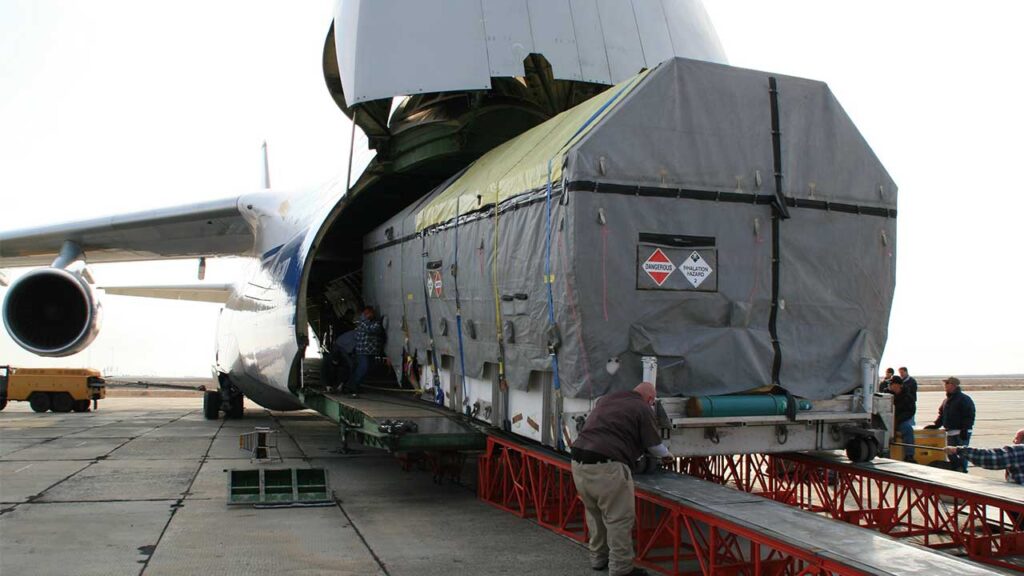
Amongst the numerous niche projects, which serve as a benchmark displaying quality and hard work, was the successful movement of railway wagons from Hyderabad to Chennai Port and further to Kota Kinabalu, Malaysia. There were a total of 3 units of wagons. The dimensions of each unit were 20.5m x 2.98m x 4m, weighing 40.5mt each. These wagons were manufactured in Hyderabad and were shipped under Breakbulk Mode. Wagons were relatively over-length and heavy, requiring a lot more precise planning than the average logistic effort for movement through the manufacturer’s remote area, and also concerned with narrow roads with smaller turning radius for over-length wagons for movement. Our project team was also involved in civil work, starting from perceiving the manufacturer’s permission to allow structural changes at their workstation. This was the only option to move wagons out of the factory. A complete factory wall was demolished just to gain a turning radius for Multi-Axels & also to avoid getting electrocuted by a live transformer which was very closely placed at the manufacturer gate.   Special permission was acquired from the Road Transport Division, the Municipal Division, and the Hiring of Police Escorts and locals to ensure smooth transport of wagons throughout the route from Hyderabad to Chennai Port. The project execution movement was based on complete planning in terms of identifying the safe logistic route and always adhering to QHSSE. The project scope was to provide a multimodal service as it involves, Transportation from Hyderabad to Chennai Port. Undergoing customs formalities and examination at Chennai Port. Sea transport of wagons from Chennai Port to Kota Kinabalu, Malaysia by Breakbulk mode. Throughout the process, we constantly maintained the lead time for delivery and cargo safety, making this an arduous task. We thank our vendor partners for their support and the Logistic Integrators (I) Pvt. Ltd. Project team, who made this project successful through meticulous planning, hard work, and teamwork.

Movement of OEPL Railway Wagons Read More »

1663220029392 1

The Dhaka Metro Project: A case study on how to handle logistical challenges with strategic solutions.

How Logistic Integrators (I) Pvt. Ltd. contributed to easing one of the world’s heaviest traffic and congestion. Logistic Integrators (I) Pvt. Ltd. is a leading Indian logistics provider that offers high-quality warehousing, freight transportation, project cargo, supply chain management, and logistic solution services. We are an exclusive member of L.I.N.K., one of the most well-known networks of international freight forwarding businesses worldwide. Through our strategy and client-focused approach, Logistic Integrators (I) Pvt. Ltd. projects reach 70 countries and 350 locations.  Here’s a case study of the ongoing Dhaka Project. PROBLEM STATEMENT:  The Dhaka Metro has long been advocated to reduce the terrible traffic jams and congestion that occur across the entire city every day, one of the heaviest in the world, together with a separate light rapid transit (LRT) system. Dhaka Mass Rapid Transit Development Project (M.R.T. – line 6) :  A fast-track priority initiative of the Government of Bangladesh is being used to develop the M.R.T. Line 6, an elevated Metro Rail line, in Dhaka. As soon as it is operational, M.R.T. Line-6 will connect Moti-jheel and Uttara, passing through 16 stations. The Government of Bangladesh and the Japan International Cooperation Agency are both contributing to the project’s funding (J.I.C.A.). The government’s Strategic Transport Plan (S.T.P.), which spans 20 years, includes M.R.T. Line-6. PROJECT DURATION: 2012 to 2024  CHALLENGES: 1.   Comply with project delivery deadlines. 2.   Cost competitiveness. 3.   Minimal cargo handling. 4.   Compliance. 5.   Q.H.S.S.E. Other challenges Logistic Integrators (I) Pvt. Ltd. faced as a result of the global turmoil – 1.   Unannounced aircraft and ship cancellations, route changes, schedule adjustments, and calls at unscheduled transhipment ports continued to occur in the trade, causing delays and missed connections from transhipment sites.  2.   Shipments were frequently forced to carry part loads because of delays in connecting flights or vessels, port congestion, and other factors. 3.   Although Logistic Integrators (I) Pvt. Ltd. is working to ensure the movement of cargo with the fewest possible interruptions, it often does not receive timely updates & pre-advise from carriers about cancellation, diversion, change of routes, etc. Phase 1 PROJECT WORK REQUIREMENTS: 1.   Receiving of rails from the mother vessel- terms C.I.F.- Chittagong Port . 2.   Project registration and customs are handled at the port. 3.   Survey and route study . 4.   Movement of rails from the port to the Uttara Metro Project Site. 5.   Unloading/ safe and secure handling of the rails at the site. The contract to handle the logistics for Rails Phase I have been granted to Logistic Integrators (I) Pvt. Ltd. STRATEGY: Lifting Plan for Operation to be performed at Temporary Jetty for Unloading of Steel Rails (Length 18 meters & 13 meters) Material Handling Equipment used for the shipment: 1.   Telescopic crawler crane – 35 mt lifting capacity 2.   Make: K.A.T.O. Works 3.   Crane capacity: 35,000 kg at 3.0 m 4.   4-section long boom: 10.6 m – 34.0 m 5.   2-staged bi-fold jib: 8.8/ 15.2 m 6.   Maximum lifting height: 34.0 m (Boom) 49.2 m (Jib) 7.   Maximum load radius: 30.0 m (Boom) 35.5 m (Jib) 8.   Strong winches: 3,190 kgf Proposed Temporary Jetty Area Located: Near Dhaka Metro Project Depot Site 2km away from the area of the site Total Area: 180 ft wide & 300 ft long Type of Lifting Material Used: 1.   Wire slings (For upper section of spreader beam): 2.   23 mm thickness – 28 ft long – 2 nos. 3.   Wire sling (For lower section of spreader beam) 4.   18 mm thickness – 18 ft long – 2 nos. 5.   Nylon belts (For an extension to the lower section) 6.   18 ft long – 4 nos.  Attachments used: D-Shackles – 10 to 12 tons capacity – 8 nos.  RESULT: Despite the setbacks that surfaced during the process, our expert team and their strategic and cutting-edge solutions enabled us to meet our deadlines for commitments and deliveries in record time. Logistic Integrators (I) Pvt. Ltd. has been assisting businesses all over the world with their strategic solutions for the past 13 years. Our customer-centric approach makes us your ideal partner. We would be pleased to assist you in identifying the best and most efficient solution for your company.  

The Dhaka Metro Project: A case study on how to handle logistical challenges with strategic solutions. Read More »

National Logistics Policy

National Logistics Policy

The products you see at the grocery store, in malls, and on websites—from luxury international brands to clothes—are stocked before they reach you. This is possible due to the logistical miracle of the present era. Jumbo trucks, long trains, massive ships, and booming planes carrying cargo—they’re the backbone of this world. According to recent research by the India Brand Equity Foundation (IBEF), annual investments in the Indian logistics industry are expected to exceed $500 billion by 2025. While all of this is exciting news, the Indian logistics sector still has to deal with issues, including transportation, a lack of particular skill sets and demanding needs. The COVID-19 epidemic has also had a substantial effect on the logistics sector over the past year. Overcoming these obstacles could significantly enhance the existing state and growth rates of the logistics sector. This is where the National Logistics Policy (NLP) will hopefully make a difference. In order to understand the National Logistics Policy, we first need to understand the requirements of this policy in the Indian logistics sector. 1. Poor Transportation Infrastructure There are four primary ways to move cargo: by land, by rail, by sea (coastal shipping), and by air. If you compare the cost of transporting one metal ton of goods in India, you will find that it costs Rs.18 per metric ton per kilometer by air, Rs.3.6 by road, and rail is by far the most economical mode of transport, at just Rs.1.6 per metric ton per kilometer. So it would seem that a significant chunk of goods would be transported by rail, but only 17.5% of goods are transported by rail in India, compared to about 71% by road. Similar to this, only a tiny part of the trade is conducted via waterways. That’s because there aren’t enough rails to handle the demand for the number of goods transported across India. Secondly, in India, both passenger and freight trains travel on the same track, with the passenger trains receiving a higher priority than the freight trains, which leads to delays. Thirdly, you must choose multimodal transport for last-mile and first-mile connectivity when you need to ship something by rail. In other words, a truck will need to transport your product from the factory to the train, unload and load it, have it shipped to a specific area, and then be picked up by another truck and delivered to your warehouse. For this reason, the majority of businesses choose road transportation over rail, relying solely on trucks. 2. Unskilled Workers The shortage of trained personnel is one of the primary issues confronting the logistics sector. As of March 2019, only 4.69% of the hired manpower was thought to be suitably skilled. The rest was made up of people who were either totally untrained or merely somewhat skilled. This implies that the industry is reduced to utilising any available labour. The government is looking at possibilities like delivering rigorous training sessions and more remuneration to educate these unskilled and partially skilled workers. It also suggests utilising more automation and technology to increase process speed and efficiency. 3. Bharat Stage Emission Standards The national logistics policy also emphasises the significance of moving to more ecologically friendly transportation methods, such as using cleaner fuels and developing new norms and laws to track emissions, waste, and noise. One such endeavour is the Bharat Stage Emission Standards (BSES). Six standards, designated from BS I to BS VI, are currently included in the BSES. Starting on April 1, 2020, BS VI became a requirement for all national auto dealers. Several modifications are introduced by this new implementation, including: 1. ULSF, a special fuel with sulphur levels below 10 ppm, is used in BS VI cars. There aren’t many refineries in India that produce this kind of fuel because it is a new need, so current refineries may have to start producing it themselves. It could require pricey new equipment for this. 2. ULSF is anticipated to cost more than current prices for gasoline and diesel due to the additional manufacturing effort this fuel requires. The NLP is geared toward the goal of lowering the carbon footprint of supply chains that work with the logistics sector, even though putting these new improvements into place would demand a larger investment. What is NLP? NLP is a government initiative with the primary goal of enhancing the flow of products throughout the nation. The policy is still being developed, but from the portions that have already been made public, we can piece together the challenges that NLP will impact. The key objectives of the policy are: a) Integration: To promote inter-modality and multi-modality by integrating processes, digital systems, policies, plans, and legislative requirements seamlessly. b) Optimization: To promote and ensure the best use of logistics infrastructure, assets, and facilities through synergistic use. c) Standardization: In the logistics sector, standardising physical assets, processes, taxonomy, and service quality standards. d) Modernization: To encourage greater use of information and communication technology, upgraded infrastructure, the use of drones, automation, innovation, green logistics, international standards, and easier integration into the global value chain. e) Formalisation: To reduce sector fragmentation, promote excellence, mainstream logistics in higher education, upskill and reskill of the existing workforce. f) Democratization: Promoting inclusivity by addressing logistics supply and user needs (agriculture and manufacturing sectors, as well as internal and external trade) and encouraging public-private participation. 4 Major Steps Under the National Logistics Policy ●  Integration of Digital Systems (IDS):  It is a software and web development company established in 1991, dedicated to developing solutions tailored to the needs of private enterprises and public bodies. NLP introduces an integrated digital system (IDS) that will consolidate departments from the ministries of road transport, railways, customs, aviation, foreign trade, and commerce onto a single platform. All these departments have their own digital data, which will be integrated under IDS. India will integrate 30 systems belonging to seven different ministries to create an integrated digital logistics system for faster, cheaper, and safer logistics services. This

National Logistics Policy Read More »